


How to Improve Coil Winding for Consistent Production
Build expert coil winding skills. Master tension control, programming and ESD protection. Deliver stable, zero-defect coils for transformers and inductors.


Motor winding machines are a cornerstone of automotive manufacturing, playing a crucial role in producing efficient, durable, and high-performance motors.

These machines ensure the precision and reliability needed for components like electric motors, power steering systems, and fuel pumps, all of which are critical for modern vehicles.
As the automotive industry shifts towards electric and hybrid vehicles, the demand for advanced winding solutions has grown significantly.
This article explores how automation and cutting-edge technologies are transforming motor winding processes, enhancing production efficiency, and shaping the future of automotive systems with sustainable and innovative solutions.

Winding machines play a critical role in the automotive industry, especially in the production of high-precision electric motors used in vehicles.
From powering electric and hybrid engines to enabling efficient cooling systems and power steering, these machines ensure that motors meet the industry’s exacting standards for performance and durability.
The precision offered by winding machines directly translates into improved motor efficiency, reliability, and longevity.
By tightly controlling the tension, alignment, and placement of wires during the winding process, these machines help produce motors that deliver consistent performance under demanding conditions.
This is particularly important for components like electric propulsion systems, where even minor inefficiencies can lead to significant losses.
Traditional manual winding processes, however, face significant challenges.
Labor shortages, skill gaps, and the risk of inconsistent quality have made it harder for manufacturers to keep up with the growing demand for high-performance automotive components.
This is where automated winding machines come in.
By incorporating real-time monitoring, error-proofing sensors, and advanced automation, these machines eliminate human errors, enhance production speed, and ensure uniformity across every product.
In today’s fast-paced automotive sector, winding machines are not just a tool—they are a necessity for achieving precision, meeting demand, and staying competitive.
With automation driving innovation, they’re paving the way for the next generation of efficient and reliable vehicles.
The automotive industry relies on various types of winding machines to produce the precise and efficient components needed for modern vehicles.
Each type of winding machine is uniquely suited to specific applications, ensuring that motors and related systems deliver optimal performance and durability.

Coil-winding machines are the backbone of motor manufacturing.
They are used for wind motors, transformers, and inductors, which are essential components in both conventional and electric vehicles.
These machines ensure that wires are wound with perfect tension and alignment, resulting in efficient energy transfer and long-lasting performance.

Hairpin winding machines are ideal for creating compact, high-efficiency motors commonly found in electric vehicles (EVs).
This technology allows for a higher fill factor, meaning more wire fits into the motor’s slots, improving energy efficiency and torque.
It’s a go-to solution for manufacturers aiming to optimize space and performance.

Needle winders are specifically designed for concentrated windings in small, high-performance motors.
They are commonly used in applications like power steering systems, actuators, and cooling fans, where precision and compact size are critical.
Fly-winders excel in creating distributed windings for larger motors.
These machines are perfect for applications requiring consistent performance across a wider range of electrical systems, such as fuel pumps and larger cooling systems.

For high-volume manufacturing, multi-spindle linear winders are the solution.
These machines allow for the simultaneous winding of multiple components, ensuring consistent quality and significantly increasing production speed.
They are a preferred choice for manufacturers producing motors at scale for mass-market vehicles.
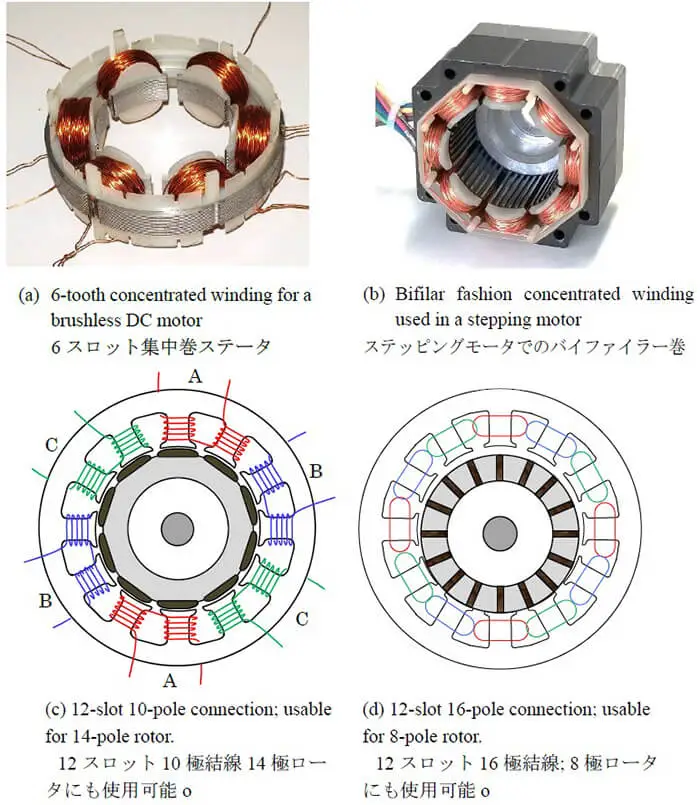
Modern motor winding machines are equipped with cutting-edge technologies that ensure precision, consistency, and efficiency in automotive manufacturing.
These innovations not only enhance the quality of motor components but also streamline production processes, meeting the increasing demands of the automotive industry.
Servo systems and drives are the backbone of motor winding machines.
These systems control wire tension and placement with extreme accuracy, ensuring uniformity in every winding cycle.
By maintaining precise control over the winding process, servo systems help reduce material waste and enhance the performance and longevity of motors.
Consistency is critical in motor manufacturing, and error-proofing sensors are designed to ensure just that.
These sensors detect potential issues, such as wire misalignment or tension fluctuations, and automatically make corrections to maintain quality.
By minimizing defects, these sensors help manufacturers save time and materials while ensuring that each motor meets stringent industry standards.

Advanced winding machines feature real-time monitoring capabilities that provide instant feedback on the production process.
Parameters such as wire tension, coil alignment, and speed are tracked continuously, allowing operators to identify and address any irregularities on the spot.
This level of control ensures consistent quality throughout the production cycle.
Seamless integration with automated production workflows is a game-changer for motor winding machines.
These machines can connect with Manufacturing Execution Systems (MES), enabling data exchange and synchronized production schedules.
This integration improves overall efficiency, reduces downtime, and allows manufacturers to scale their operations to meet growing demands.
Motor winding machines play a crucial role in the automotive industry, where precision and reliability are essential.
From electric vehicles to traditional cars, these machines are used to manufacture critical components that ensure efficiency, safety, and performance.
Let’s explore some of their most important applications.

Electric motors are at the heart of electric and hybrid vehicles, powering their propulsion systems.
Winding machines are essential for creating the high-precision coils these motors require.
The exactness of the winding ensures efficient energy transfer, improved torque, and longer motor lifespan—key factors in driving the adoption of electric vehicles.
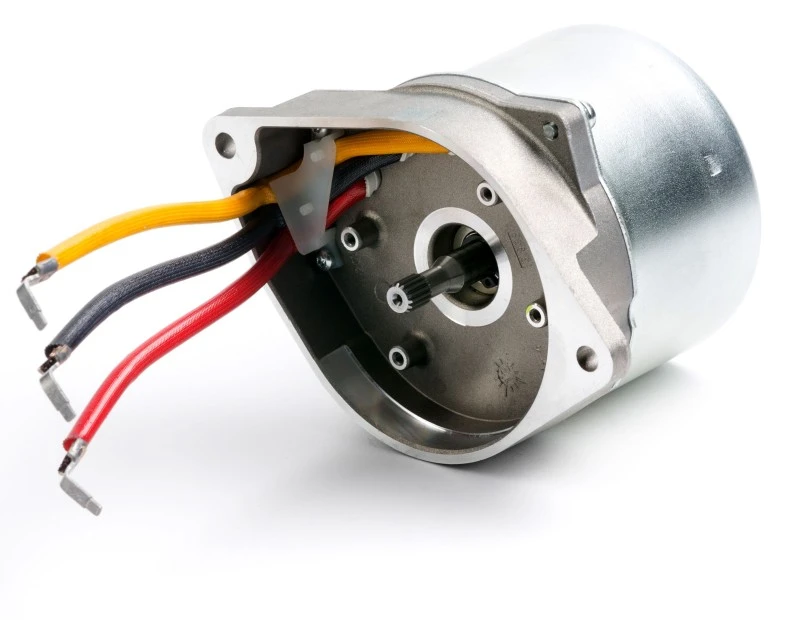
Modern vehicles rely on power steering systems for smooth and precise control.
Winding machines ensure the production of compact, high-performance motors that deliver consistent assistance to drivers, improving handling and overall driving experience.

Winding machines are critical in manufacturing motors for fuel and coolant pumps.
These pumps require durable and efficient motors to regulate fuel supply and maintain optimal engine temperatures.
Precision winding ensures these motors can handle the demands of high-speed automotive systems without compromising reliability.

Vehicles today are packed with sensors and actuators that monitor and manage everything from braking systems to engine performance.
Winding machines produce the precise coils needed for these components, ensuring accuracy and responsiveness, which are vital for safety and performance.

Automated winding machines are revolutionizing the automotive industry, offering a range of benefits that make manufacturing processes more precise, efficient, and cost-effective.
These machines address many challenges faced by traditional manual winding methods while setting a higher standard for quality and productivity.
Precision is everything when it comes to manufacturing high-performance automotive components.
Automated winding machines deliver consistent production quality by maintaining precise tension and alignment throughout the winding process. This reduces material waste, ensures uniformity in every coil, and directly improves motor performance and durability—essential for vehicles operating under demanding conditions.
Automation is key to faster production.
With higher production speeds and minimal downtime, automated winding machines allow manufacturers to meet increasing demand without compromising quality.
These machines also offer faster turnaround times, enabling manufacturers to scale production efficiently while staying competitive in a fast-paced industry.
By minimizing reliance on skilled labor, automated winding machines significantly reduce labor costs.
They also minimize human errors, resulting in fewer defective products and less waste.
Over time, this not only lowers production costs but also improves overall profitability.
Repetitive and labor-intensive tasks can lead to physical strain and injuries for workers.
Automated machines take over these tasks, allowing human operators to focus on overseeing processes rather than performing physically demanding work.
This enhances worker safety and contributes to a healthier work environment.

The automotive industry is undergoing rapid transformation, and with it comes unique challenges in motor winding processes.
Manufacturers must address these issues to meet growing demand while maintaining quality and efficiency.
One of the biggest hurdles is the labor shortage, which makes it increasingly difficult to find skilled workers for manual winding processes.
Even when labor is available, manual winding often leads to inconsistent results, with variations in tension and alignment that can compromise motor performance.
Additionally, the demand for lightweight, high-efficiency motors, especially in electric and hybrid vehicles, has created a need for more precise and advanced manufacturing techniques.
Automated winding machines provide a solution to these challenges by incorporating advanced technologies that ensure precision and consistency.
These machines reduce reliance on skilled labor, enabling manufacturers to streamline operations.
Features like error-proofing sensors and real-time monitoring allow for immediate detection and correction of issues, ensuring uniform coil production.
Automation also makes it easier to produce lightweight, high-efficiency motors at scale, meeting industry demand without compromising quality.
By addressing these challenges with cutting-edge winding machines, manufacturers can enhance production efficiency, maintain high standards, and stay competitive in the evolving automotive landscape.
Automation is not just a solution—it’s the future of motor winding in the automotive industry.

The automotive industry is rapidly evolving, and winding machines are at the forefront of this transformation.
With the growing demand for energy-efficient motors in electric vehicles (EVs) and autonomous cars, manufacturers are turning to advanced winding technologies to meet these needs.
These machines enable the production of lightweight, high-performance motors that maximize energy efficiency and extend vehicle range.
Advancements in AI and machine learning are also shaping the future of winding machines.
By integrating intelligent systems, manufacturers can achieve unmatched precision, automate quality control, and optimize production workflows.
These technologies reduce errors and ensure that every motor meets the exacting standards required for modern vehicles.
Additionally, there is a growing emphasis on sustainability.
Winding machines are being designed to handle eco-friendly materials and support the production of lightweight motors, reducing the environmental footprint of automotive manufacturing.
This focus on sustainable practices is not only good for the planet but also aligns with consumer and regulatory demands for greener vehicles.
The future of winding machines is all about innovation—smarter, faster, and more sustainable solutions that drive the automotive industry forward.

Motor winding machines are essential for the efficiency, precision, and sustainability of the automotive industry.
They ensure the production of high-performance components needed for electric and hybrid vehicles, addressing growing demand while improving quality and reducing costs.
Automation has redefined manufacturing, making processes faster, more reliable, and environmentally friendly.
Ready to take your manufacturing processes to the next level?
Embrace automated winding machines to enhance productivity, ensure precision, and meet the demands of modern electric and hybrid vehicles.
Invest in the future of innovation and sustainability today!
A motor winding machine is specialized equipment used to wind the coils in electric motors. These coils are critical for creating the magnetic field needed to power the motor. Winding technology plays a key role in ensuring the quality, precision, and efficiency of the finished product. This equipment is essential in industries requiring high-performance motors, such as automotive, aerospace, and electronics manufacturing.
For cable winding, machines like the “MOTROL” motor-driven ring winding series and the fully automatic cable ring and binding machine “RINGROL” are commonly used. These devices can operate both inline (as part of a continuous production line) and offline, depending on production requirements. They ensure precise and efficient winding of cables for various industrial applications.


Build expert coil winding skills. Master tension control, programming and ESD protection. Deliver stable, zero-defect coils for transformers and inductors.


Introduction Toroidal transformer are widely used in high-end industries such as audio equipment, medical devices, and new energy vehicle. Their advantages—high efficiency, low magnetic leakage,

Regular maintenance—cleaning, lubrication, inspection, calibration—ensures your coil winding machine runs smoothly, reduces downtime, and prolongs lifespan.

The direction of coil winding -CW vs. CCW defines magnetic field orientation, affects motor spin, torque, phase timing and avoids vibration or mis‐phase issues.

Learn key controller settings: turns, layers, speed, direction, start points & modes. Correct setup ensures precision, fewer defects & efficient winding.
Coil winder miscounts happen when the sensor targets the storage ring instead of wire flow, or when the controller switch isn’t set to 4NA.
 English
  Spanish
  Russian
  Italian
  German
  Chinese